How Do You Prove It Was Not Your Fault
You prove fault with evidence gathered at the scene and soon after, not with your word alone.
What actually proves fault to an adjuster
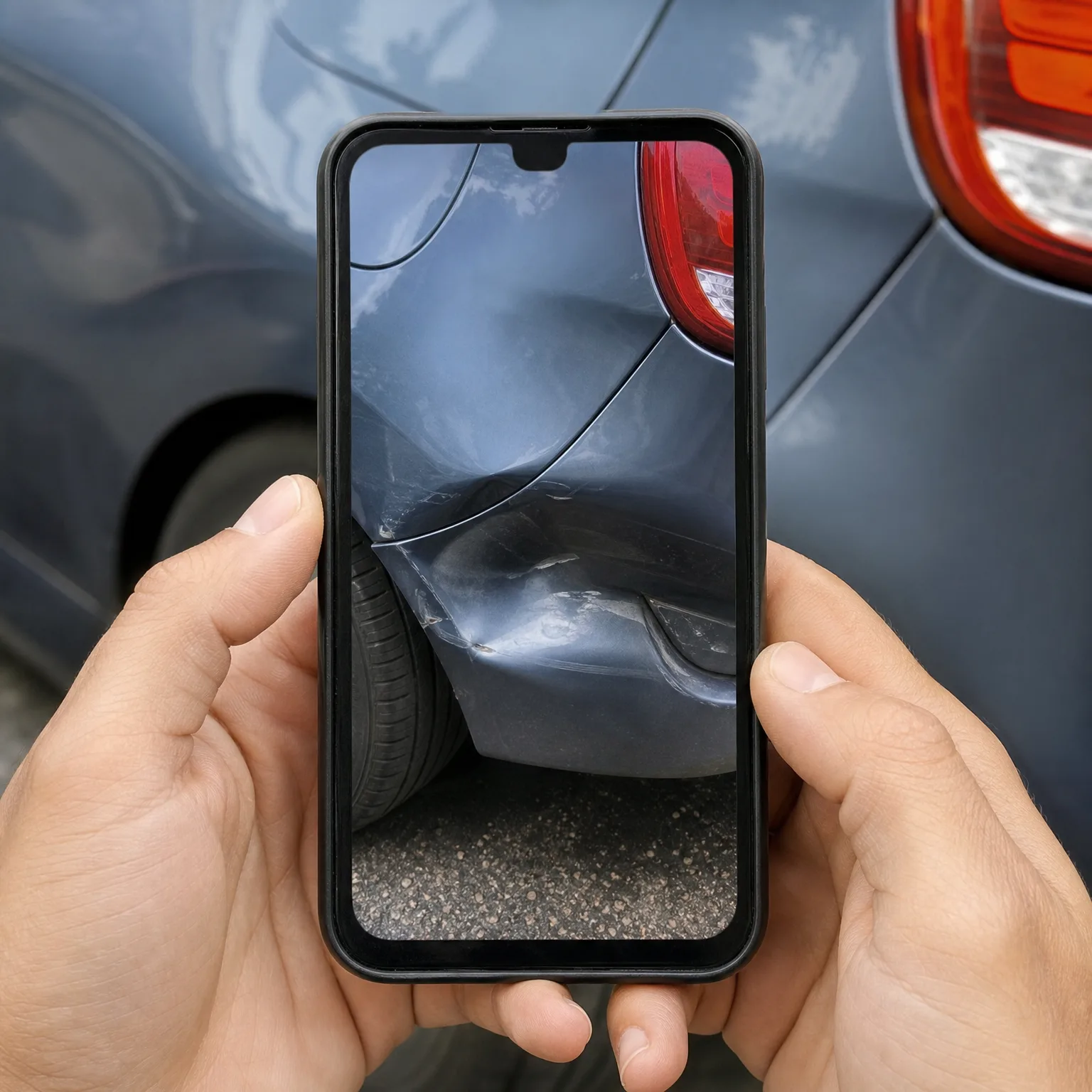
- Photos of the scene Pictures of vehicle positions, damage, skid marks, traffic signals and road conditions show what happened without anyone's interpretation. Take them before cars are moved if it's safe to do so.
- The police report An officer's report often includes statements, citations and a preliminary fault opinion that carries weight. Request a copy and check that your account matches what's written.
- Witness contact info A person with no stake in the outcome who saw the crash is some of the strongest proof you have. Get their name and number before they leave, because you likely won't find them later.
- Your own account in writing Write down what happened while it's fresh, including time, location, speed and what each driver did. This becomes your reference point for every call and statement afterward.
- Vehicle damage patterns Where the damage sits on each car tells its own story about direction and impact. An adjuster or appraiser can read this, so don't let repairs start until it's documented.

The short version
You prove fault with scene photos, a police report, witness contact information and your own written account, gathered as soon after the crash as possible. The reason it works is that evidence collected close to the event is harder to dispute than memory alone. Start by writing down what happened today, then request your police report.
A rear-end crash where the other driver blamed you first
You were stopped at a light when the car behind you struck your rear bumper. The other driver told the officer you braked suddenly for no reason, which wasn't true. At the scene you took photos of both cars, noting the crumpled front end on their vehicle and the untouched rear lights on yours, and you got the name of a pedestrian who saw the whole thing from the sidewalk.
When the other driver's insurer called, their adjuster initially repeated the sudden-braking claim. You gave them the witness's contact information and pointed out that rear-end damage with no skid marks on your side is consistent with their driver following too closely, not with you stopping abruptly. The witness confirmed your account when contacted. Combined with the photos and the responding officer's report, which cited the other driver for following too closely, the insurer accepted fault within the first round of calls and moved forward with covering your repairs and rental.
Once you know how fault gets proven, compare quotes knowing what coverage protects you if proof is ever disputed.
What If There's No Police Report Or Witnesses?
You can still prove fault, but it takes more work and relies more heavily on physical evidence and your own documentation. Photos of damage patterns, the final resting position of both vehicles, and any debris or skid marks become your primary proof. Take them as soon as you can.
Dashcam footage, if either driver has it, can settle the question quickly. Traffic or security cameras near the scene sometimes capture the crash too, so it's worth asking nearby businesses before footage gets overwritten. Your own written account, done immediately while details are fresh, also matters more in these cases since there's less outside corroboration. Insurers are used to working with partial evidence and will weigh what's available, so don't assume a missing report or witness means you can't prove your case.
Why evidence collected early carries so much weight
An insurance adjuster wasn't at the crash and has no way to know what happened except through what gets reconstructed afterward. Their job is to weigh competing accounts against physical evidence, so the more concrete and time-stamped your evidence is, the less room there is for a different version of events to take hold.
This is also why delay works against you. Skid marks fade, vehicles get moved or repaired, and witnesses become harder to reach as days pass. Insurers know this too, which is part of why adjusters move quickly to take recorded statements. They want the account that gets locked in first, so you benefit from locking in your own record just as fast.
Fault determination also isn't always all or nothing. Some states and insurers apportion fault by percentage between drivers, so proving the other driver was mostly at fault can matter even if some shared responsibility exists. Check how your state handles this, because it can affect what you're owed even when fault isn't fully one-sided.
In cases where evidence is thin or conflicting, insurers sometimes rely on accident reconstruction specialists or industry databases of typical crash patterns. This is more common in disputed or serious claims. If you reach that point, having your own documentation ready still strengthens your position, since it gives any investigator a clearer starting point instead of two competing stories with nothing to anchor them.
What if the other driver lies to their own insurer?
Your evidence is what counters this, not an argument over whose word is better. Photos, witness statements and the police report exist independently of what either driver claims, so a false account usually unravels once an adjuster compares it against them. If the other insurer seems to be favoring their driver's story anyway, ask what specific evidence they're relying on and provide anything that contradicts it directly.
Should I give a recorded statement to the other driver's insurer?
You're not obligated to in most cases, and it's worth being cautious before you do. Recorded statements can be used to find inconsistencies or to narrow what you're owed, so consider waiting until you have your documentation organized and know what you're asserting. You can often provide a written statement instead, or have an attorney review the situation first if the claim is significant.
Can I still get my car fixed while fault is being disputed?
Yes, you don't have to wait for fault to be resolved before starting repairs. You can use your own collision coverage if you have it and let your insurer seek reimbursement from the at-fault driver's insurer afterward, which is often faster. Check your policy for how this process works and whether a deductible applies while the dispute is settled.